From vision to Monday morning, and the choice that comes next
AI projects rarely fail on technology. They fail on adoption, and that makes AI transformation just as much a leadership question as a technical one. AI Recruitment Architect Marcel van der Meer on the choice every recruiter faces between Type H and Type A, and why that choice is not the team’s to make alone.
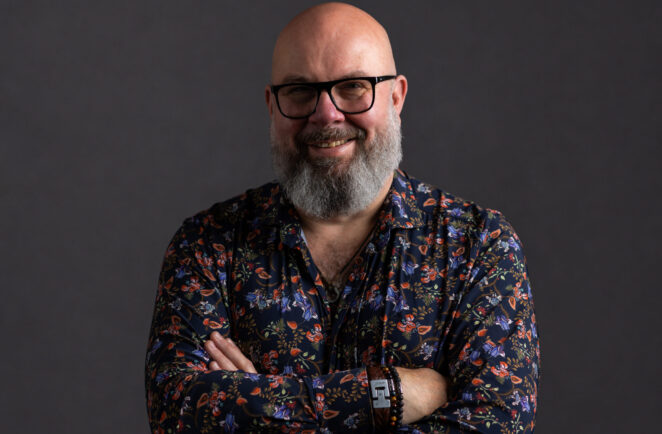
Guest column by Marcel van der Meer, AI Recruitment Architect & Trainer at Klikwork
Ralph asked the question in his blog that, to me, is the one that really matters: do you keep optimising, or do you innovate? Every week, in my work, I see what happens after that question. A team nods at the vision. The ambition is clear. And then Monday morning comes, and nothing changes.
That gap, between a good vision and what you actually do on Monday, is where my work begins. I build AI solutions for staffing and recruitment organisations, and I train the people who have to work with them. Doing both side by side, I see something you miss from strategy alone or from technology alone. The biggest change of this moment is not that work gets faster. It is that the profession itself is splitting in two, and that over the coming years every recruiter chooses which side they stand on. I will come back to that. First, why it so often stalls.
Adoption is not a matter of unwillingness
AI projects rarely fail on the technology. They fail on adoption. And adoption is almost always misunderstood. It is not a matter of lazy or anxious people who refuse to come along. The recruiters who resist hardest are often your best people. Over years they have built routines that work, and those routines are their craft. Ask someone to bring in AI, and you are really asking them to doubt something they are good at. That is not a technical barrier, it is a question of identity.
That is why “here is the tool, go use it” almost never works. People do not trade what works for a promise. They only do it when they feel, in one place, in one task, that it genuinely gets better. Better in a way they can feel, in their own work, this week. Adoption is not a training session at the end; it is the heart of the whole project. In most projects I do, technology is about twenty percent of the work. The rest is behaviour.
"In most projects I do, technology is about twenty percent of the work. The rest is behaviour."
AI does not replace recruiters, it replaces tasks
That is the principle underneath everything I do. AI does not replace recruiters; it replaces tasks. And that distinction decides everything.
For years the recruiter was mainly a process manager. Much of the value sat in things that take time: searching, calling, screening, planning, switching between systems. That is exactly the work AI now takes over. What remains is not less valuable, it is valuable in a different way. When the transactional work falls away, your value shifts to what a machine cannot do, or to what you can build with a machine.
That is the real question. Not: do you use AI? Everyone will use AI, just as everyone uses a phone. The question is whether you only use AI, or shape it. Those who only use AI become easy to replace. Those who build their own systems, or make the human the core, do not.
"The question is whether you only use AI, or shape it."
Type H or Type A
In my training I capture that choice in two types. Type H and Type A. Over the coming years nearly every recruiter moves toward one of the two, consciously or not.
Type H is the human recruiter. This type doubles down on what a machine cannot do: trust. In our profession trust is the real product, and it forms when people talk to each other, not when a system sends an email. The qualities that count here are exactly the ones no CV shows and no model imitates: curiosity, empathy, resilience, integrity and the ability to inspire trust. Type H does use AI, but in the background. For the bulk, let automation do the work; for the senior candidate, the scarce specialist, the client who is hesitating, this recruiter is there in person, from the first contact. And wins in depth.
Type A is the builder, what I call the AI recruitment engineer. This is not a programmer; it is the conductor of an AI orchestra, wearing three hats. The first is problem solver: spotting friction and removing it. The second is workflow builder: connecting AI, ATS and CRM into one system that keeps working while you sleep. The third is product owner: guarding data quality, bias and compliance. Where Type H wins on depth, Type A wins on leverage; this recruiter does in a day what a team used to do in a week.
Both are good choices. What disappears is the recruiter in the middle. The process manager who has neither turned the relationship into an art, nor mastered the technology. That is exactly the work AI takes over fastest and cheapest. I sometimes call that middle group the prompt jockeys: people who chat with AI all day, but build nothing with it and move no one. Ralph wrote that mediocrity is getting harder for organisations. At the level of the individual recruiter the same is true, and sharper: the comfortable middle is the first place to disappear.
"The comfortable middle is the first place to disappear."
How you start today
The good news: you do not have to make that choice all at once, and certainly not on your own. You make it in small steps, every week.
Start with the friction, not the tool. The question is not “which AI are we going to deploy”, but “where do you lose the most time today, on work no one really enjoys”. Two questions get you a long way. Which task takes the most time but feels the most pointless? And where do your people make the real difference? The first answer points to what you automate. The second points to what you leave alone, or strengthen.
Also start where you are, not where you want to be. I use four stages: crawl, walk, run, fly. A team that uses ChatGPT now and then without any agreements is crawling; there you begin with one shared way of working and one success experience, not with agents. The mistake I see most often is the ambition of “fly” with the working method of “crawl”. Take one step above where you are now.
And build one workflow, not a platform. An example I run into often: recruiters who start every search on LinkedIn, while their own database is full of good candidates no one looks at anymore. The reflex is to put better search on that database. But searching your own ATS without a solid update process does not work; you are searching outdated data and finding people from three jobs ago. So the real first step is to make your database current and keep it that way, with a process that automatically enriches and updates profiles. Only once the data is right does semantic search start to pay off, and behaviour changes too: the recruiter feels that their own database is suddenly faster and better than starting over. Spot the friction, test fast, scale what works, repeat. That one working example gives you something no slide can: trust. Only then the next one.
The human keeps control
One principle stays standing, however far you go toward Type A: automate for scale, keep it human where it counts, and document for compliance. AI supports with insights, suggestions and preparation; the decision stays with the human.
That is not only a choice, it is becoming law. Under the EU AI Act, recruitment counts as high risk, with the heaviest requirements from August 2027. Ranking and prioritising is allowed; a system that rejects candidates on its own is not. From day one, make sure every important decision is traceable, that candidates know when AI is involved, and that the recruiter has the final say. Anyone who arranges that only afterwards is building something fine that will not be allowed.
And then it is Monday
Ralph asked whether you shape the change yourself. For an organisation the question is: optimise or innovate. For you, as a recruiter, it becomes more personal and more concrete: do you become Type H or Type A? Do you go deeper into the human side, or become the engineer who rebuilds their own work? Both are good. Only the middle is no longer a safe place.
You do not need the answer today. But you choose it anyway, every Monday, with whatever you pick up first. The technology is ready. The tools are here. What remains is the choice of who you want to be in this profession. You build, or you get built.
We have made our choice. I am curious about yours.
About Marcel van der Meer
Marcel van der Meer is an AI recruitment trainer, consultant and keynote speaker with over 20 years of experience in recruitment. He guides recruitment teams worldwide through AI-driven transformation and has supported over 10,000 recruiters and 500+ companies, ranging from SMEs to global enterprises. He has delivered keynotes on all six continents, sharing practical AI strategies for recruitment and automation.
Want to know more? Visit klikwork.com
Discover how you can take your business to the next level