Are you still optimizing or are you innovating?
While many agencies optimize their processes, the market is changing fundamentally. Mediocrity becomes harder. AI amplifies existing differences. Organizations that get stuck in optimization alone lose competitive advantage.
How to approach it differently and my vision on AI in our industry, read in the column below 👇
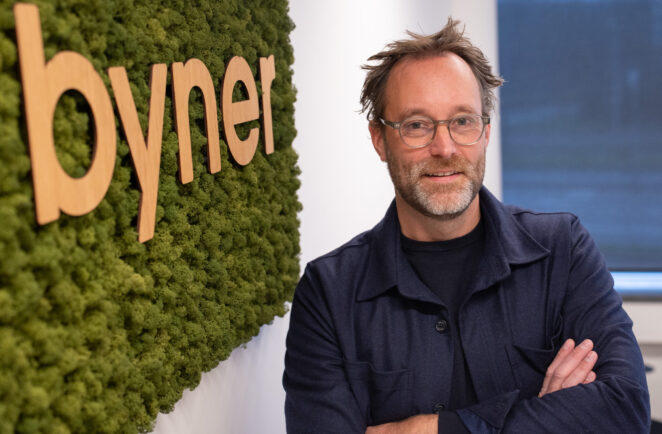
A few weeks ago, I spoke at Evolve 2026, our annual community event for the staffing and recruitment industry. What started as a customer event has grown into a major industry conference with over 200 participants.
In my view, we are at the beginning of the biggest transformation our industry has experienced in decades. Not because AI makes software smarter, but because AI fundamentally changes how staffing organizations create value.
That’s why one question dominated Evolve 2026:
Are you still optimizing – or are you innovating?
The staffing market is changing faster than business models
I see four things happening simultaneously within the industry.
- Clients are demanding more – The professional landscape is shifting and requires a different type of service than it did five years ago. Clinging to the traditional staffing model is now a brake on growth.
- Operational and performance pressure keeps rising – Faster processes, greater transparency, tighter margins. Optimization isn’t a strategy; it’s really just delay. Making a process a few percent more efficient feels like progress, but it’s often just postponing the real question that needs to be asked.
- Compliance is no longer the floor – it’s becoming the license to operate – Equal pay standards, new labor regulations, the EU AI Act. It’s no surprise that 84% of staffing firms cite legislation as their biggest challenge.
- And AI is the driver of all these changes. But perhaps more importantly: AI doesn’t just change how staffing organizations work – it changes their business model. Speed and capacity are no longer the competitive advantage. The value you deliver to clients and candidates is. AI automates transactions. That makes human expertise increasingly valuable. Trust, context, entrepreneurship, and relationships become the factors organizations compete on.
What successful agencies do differently
And yet, why is one agency more successful than another? In conversations with staffing leaders, I notice some clear patterns. Successful agencies don’t stand out because they do more – they stand out because they choose deliberately.
They define a clear market position and profile. They invest in leadership and culture. They build organizations that can move with change. And crucially: they innovate while others optimize. And change never stops.
Their focus shifts from hours to value. Not how many people you deploy, but what impact you create for clients becomes the new competitive edge.
AI doesn’t change who creates value – it changes how value is created.
For years, competitive advantage came from speed, capacity, and operational efficiency. AI is turning those very things into commodities.
So the competitive advantage shifts elsewhere: understanding context, building trust, asking the right questions, and providing strategic counsel to clients.
Maybe in five years, staffing firms won’t sell capacity – they’ll sell access to specialized talent communities, labor market insights, and strategic talent advisory. That’s what I mean when I say AI changes the business model.
AI automates sourcing, CV screening, interview prep, compliance, and administration. But it doesn’t automate entrepreneurship, relationship management, or genuine judgment.
Precisely because AI takes over more transactional work, human qualities become more valuable.
"AI doesn't change who creates value, but how value is created."
The impact varies by business model. For staffing firms, there’s more room for good employer practices and talent development. In recruitment and selection, the focus shifts to uncovering latent talent and deeper assessments. MSPs differentiate through real-time compliance and predictive insights. The common thread remains: AI changes not just processes, but where organizations create value.
The consultant of the future
What does this mean for the consultant? Today, they’re often mainly a process manager. Much of their time goes to administration, compliance, scheduling, and juggling between different systems and stakeholders.
The consultant of the future is much more of a strategic advisor. Focused on relationships, context, and the right match. AI handles the groundwork and follow-up so the consultant can focus on where people really make the difference.
AI doesn’t replace the consultant. It changes where they spend their time.
How we think about AI at Byner
As we shape and build our AI roadmap, we follow a set of principles based on our vision. I want to highlight a few, because they say something about how I believe AI should work in our industry – regardless of who builds it.
- People make the decisions.
AI supports with insights, recommendations, and automation, but responsibility and the final decision always remain with humans.
- Relationships come first.
Technology should strengthen human relationships, not replace them. AI should create more space for meaningful interaction, not less.
- Embedded, not separate.
AI should work within the workflows where staffing and recruitment organizations already operate – not as a separate layer on top.
- Built on context.
AI only becomes valuable when it understands operational workflows, relationship history, and business context. Without that context, it’s just a clever text generator.
- Trusted by design.
Transparency, traceability, compliance, and controllable autonomy are fundamental. The organization always retains control over how AI is deployed.
That’s why we often use the image of a tandem. The recruiter sets the direction. AI provides the power. So humans and technology strengthen each other.
From workflow to AI Assistant to AI Agents
Our AI roadmap follows the same logic as our clients’. First, a solid operational foundation. Then, an AI Assistant that supports users. Eventually, AI Agents that perform tasks independently while users maintain control.
Where do you start?
If I could give one piece of advice to organizations that want to get serious about AI, it would be this: don’t treat AI as an IT project – treat it as a strategic organizational challenge.
Start by identifying your operational friction points. Where are you losing time today? Where are the bottlenecks? Then look at where you add real value. Where do your people actually make the difference for clients and candidates? These are often not the same processes.
Next, ensure you have a solid data foundation. AI only works well when it understands the context of your organization. Then build a roadmap where you prioritize based on the greatest impact. Start small, experiment, learn, and improve continuously.
And perhaps most importantly: invest as much in leadership, adoption, and culture as you do in technology. In the end, it’s not the AI tools that make the difference – it’s the people using them.
"The question isn't whether AI will change your organization. It already is. The question is whether you shape that change yourself."
Mediocrity is getting harder
AI amplifies existing differences. Organizations with clear positioning, strong culture, and clear strategy will grow faster. Organizations that get stuck optimizing existing processes are losing competitive edge.
AI doesn’t replace the best staffing and recruitment firms. But it does make mediocrity much harder.
So the question isn’t whether AI will change your organization. It already is. The question is whether you’ll shape that change yourself.
Are you still optimizing – or are you innovating?
We’ve made our choice. I’m curious about yours.
Ralph Brasker
CEO Byner
Discover how you can take your business to the next level