Embedded AI vs. AI chatbots
Let’s be honest: there’s an AI chatbot for everything now. Almost every week, another new assistant shows up promising to write faster, summarize better, and help you get things done.
And yes, they deliver what they promise. They’re genuinely useful. But here’s the catch: they’re all looking at your work from the outside.
The interim AI
Traditional AI works like a temporary contractor who drops by for one meeting. You explain your project, your client, your goals, and they give you output. Helpful. But the moment they leave, they forget everything. So next time you need help, you’re starting from scratch again like they’re a brand new person.
These AI chatbots mainly live in browser tabs, separated from your actual work. You copy information to them. They generate content. You copy it back. You explain the context over and over. You paste data between systems back and forth.
In short: not exactly the most efficient way to work.
The permanent team member
Now imagine: AI that’s built into your company. Familiar with your clients, your history, your workflow, your data, not because you told it, but because it’s woven into the platform you use every day. Like a real, properly trained colleague.
That's embedded AI. And it changes what's actually possible.
When AI understands context from within your system, it’s no longer just a writing tool, it’s a work accelerator. It sees the full picture. It makes connections between information you’ve already captured. It anticipates what comes next.
Here’s what that looks like:
No copying between systems. No explaining yourself over and over. No browser tab exhaustion.
In practice
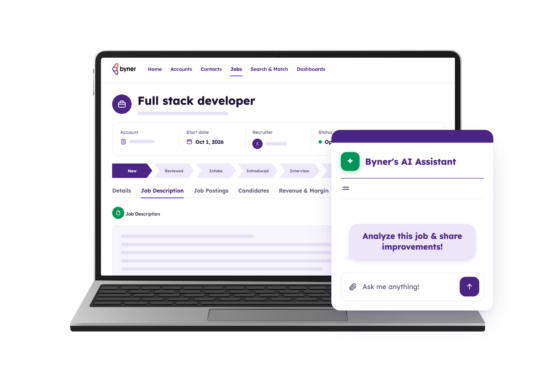
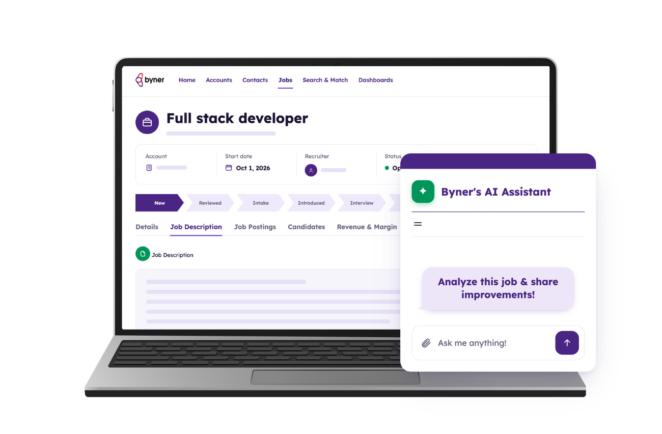
At Byner, we built AI directly into our platform because we saw this exact problem. Our embedded AI isn’t a chatbot you consult—it’s a colleague who already understands your work and always has your data at hand.
When you’re working in the platform, the AI understands your work, your data, and your context. It handles repetitive tasks. It keeps information synchronized without extra steps. And it sits at the center of how your work gets done, not off to the side.
That’s exactly where the difference is made: AI that works *within* your process, not beside it.
What this means
This isn’t about replacing people. It’s about removing noise and tedious work so there’s room for what really matters: meaningful connection and nothing getting lost.
Every hour you spend copying data between systems, manually updating records, or explaining context to yet another tool, is an hour not spent on what actually counts: building relationships, asking better questions, making good decisions.
Embedded AI cuts through the friction. It handles repetitive work automatically. It keeps information current without extra steps. It stays synchronized with your workflow because it’s part of your workflow.
For teams in any field, where information constantly flows, this distinction makes all the difference.
The real question
When you’re evaluating AI tools, most people ask: “What can it create?”
The better question is actually: “How does it make my work easier?”
Want to stay ahead? It’s not about being the company with the most AI features. It’s about companies where teams let AI handle the repetitive stuff and spend their own time on the human work: thinking, connecting, and building relationships.
Standalone chatbots generate output. Embedded AI is a true colleague.
Learn more about how embedded AI transforms your work