Project-based work in a changing market
The way IT services are structured is broadening. In addition to secondment and individual assignments, some organisations are increasingly opting for project-based work. Not as a replacement for existing models, but as an additional way to better align with specific customer needs.
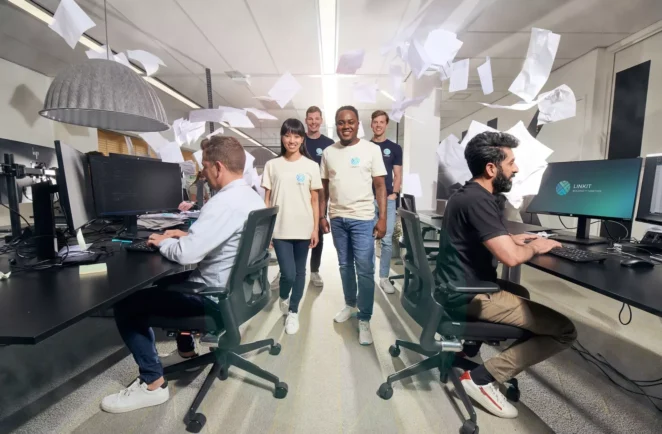
LINKIT recognizes this development in practice. The organisation sees that conversations with clients are less often about staffing and hours, and more about the results to be delivered. This requires not only a different way of working together, but also different insights and forms of steering.
From deployment to results
Within LINKIT, it is clear that the context in which work is carried out is changing. “Legislation and regulations, developments in the freelance market and attention to equal pay all play a role. At the same time, the nature of client requests is also changing. In some engagements, the focus shifts from who does the work to what is delivered.Especially among larger and public-sector clients, result-based commitments are becoming a more common starting point. For LINKIT, this was a reason to further structure project-based work and support it with better tooling.”
“Conversations are increasingly about outcomes and collaboration, and less about individual deployment.”
Project-based work requires overview
Project-based work has been part of LINKIT’s services for several years. It is a way of working that fits well with both clients and professionals, but it also brings new challenges. “With around 200 IT professionals on permanent contracts, insight into capacity, planning and project progress is essential. In practice, this overview proved difficult to organise. Information was scattered across systems, Excel sheets and separate reports, often with hindsight. This made forward planning and adjustments complex.”
Developed together from practice
To improve this, LINKIT worked together with Byner on the Byner PSA module. Not a generic solution, but an environment developed from the day-to-day reality of project-based work: bringing planning, resources and project insights together in one place.
“Byner PSA connects sales, planning and resources, and provides insight at project level. It clearly shows who is available and when, allows soft bookings for potential projects, and ensures all departments work in the same way.”
“Byner PSA connects sales, planning, resources and project insights in one environment, making us faster and smarter.”
Control over projects and predictability
In addition to resource visibility, Byner PSA also supports project control. Budgets, margins, hours spent and remaining work are continuously visible. This provides earlier insight into how a project is progressing and what that means for the expected outcome. “Where previously it only became clear late that projects were off track, Byner PSA provides earlier signals. This makes adjustments easier and increases predictability, without registration becoming an end in itself.”
Looking ahead
What LINKIT values is that Byner PSA is not a complex system. “Its strength lies in simplicity and cohesion. Processes that were previously separate now come together in one environment. This makes the system practical to use and increases adoption within teams. The foundation for project-based work is now firmly in place. Byner PSA helps LINKIT keep project-based work clear and manageable, in line with how the organisation works today and will work tomorrow.”